
Last updated November 21, 2026
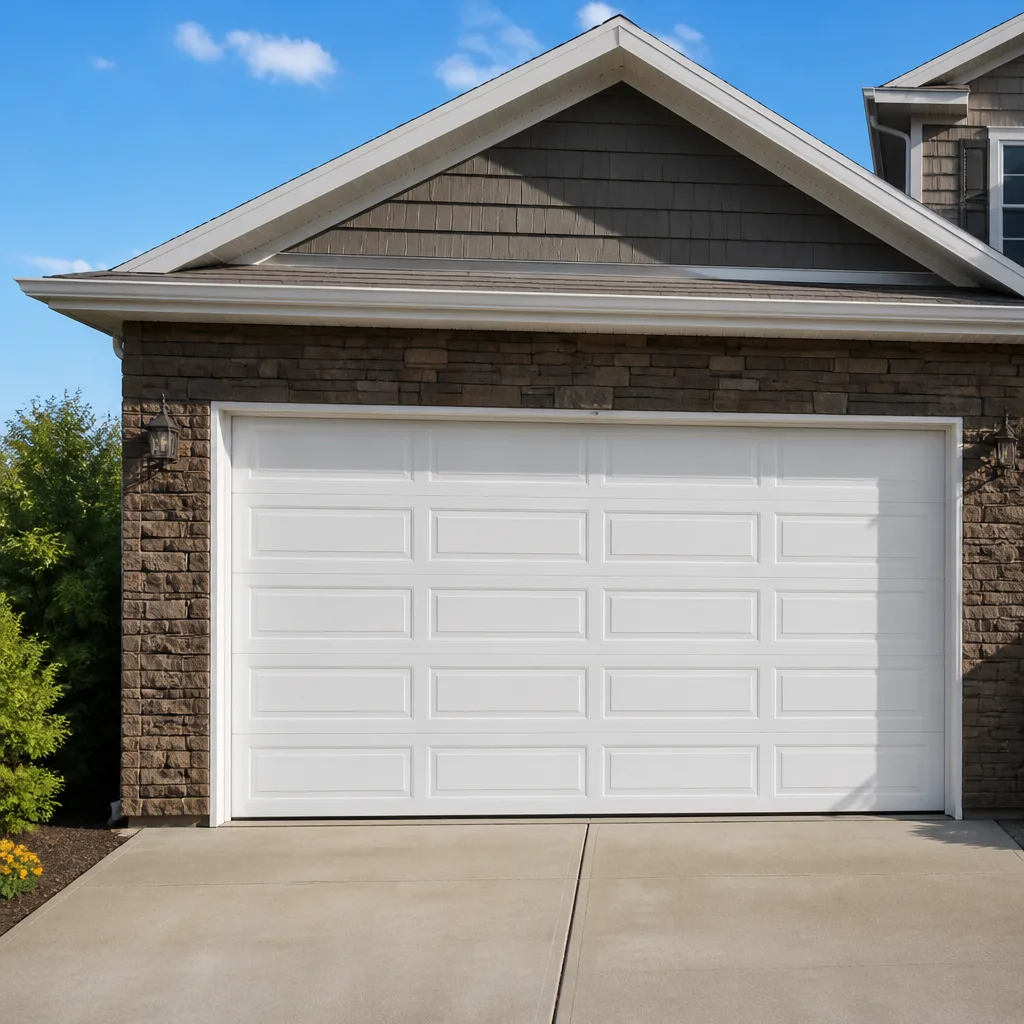 Raised-panel steel
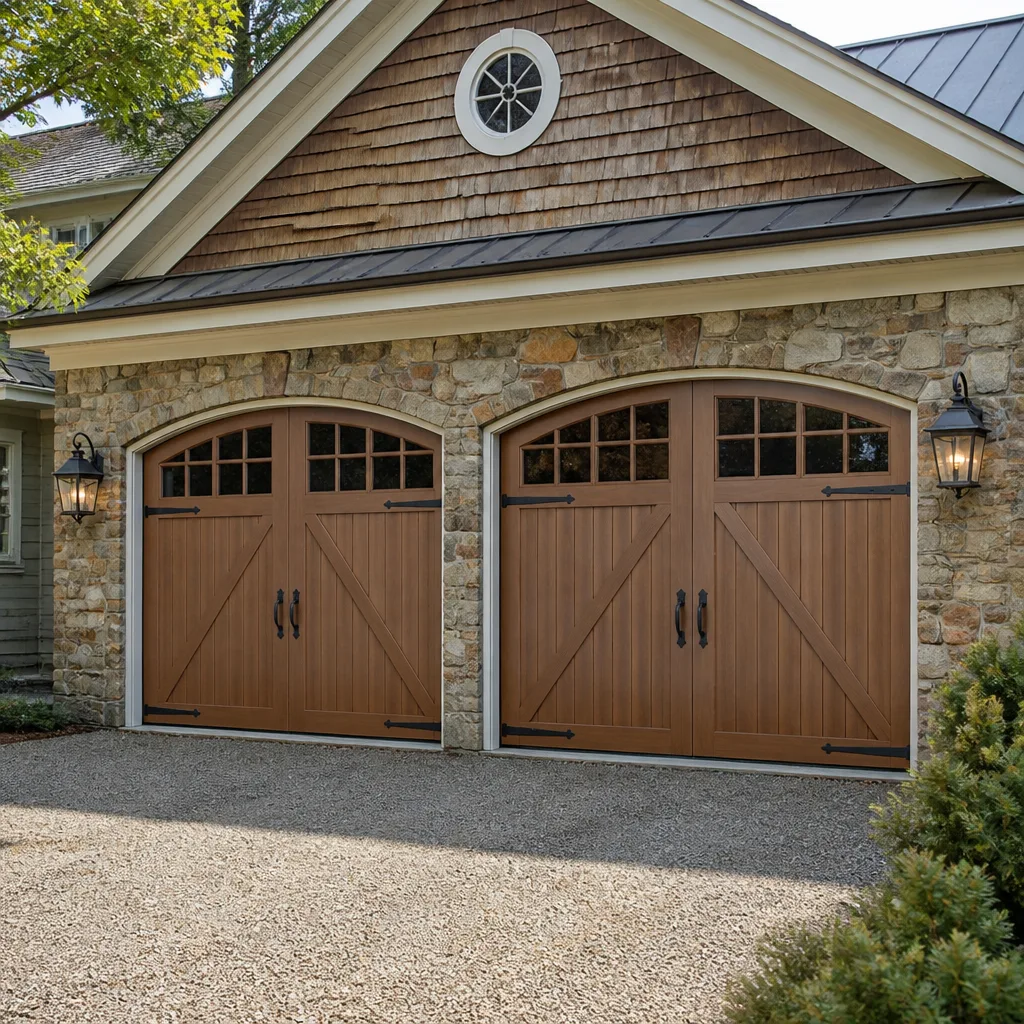 Carriage house
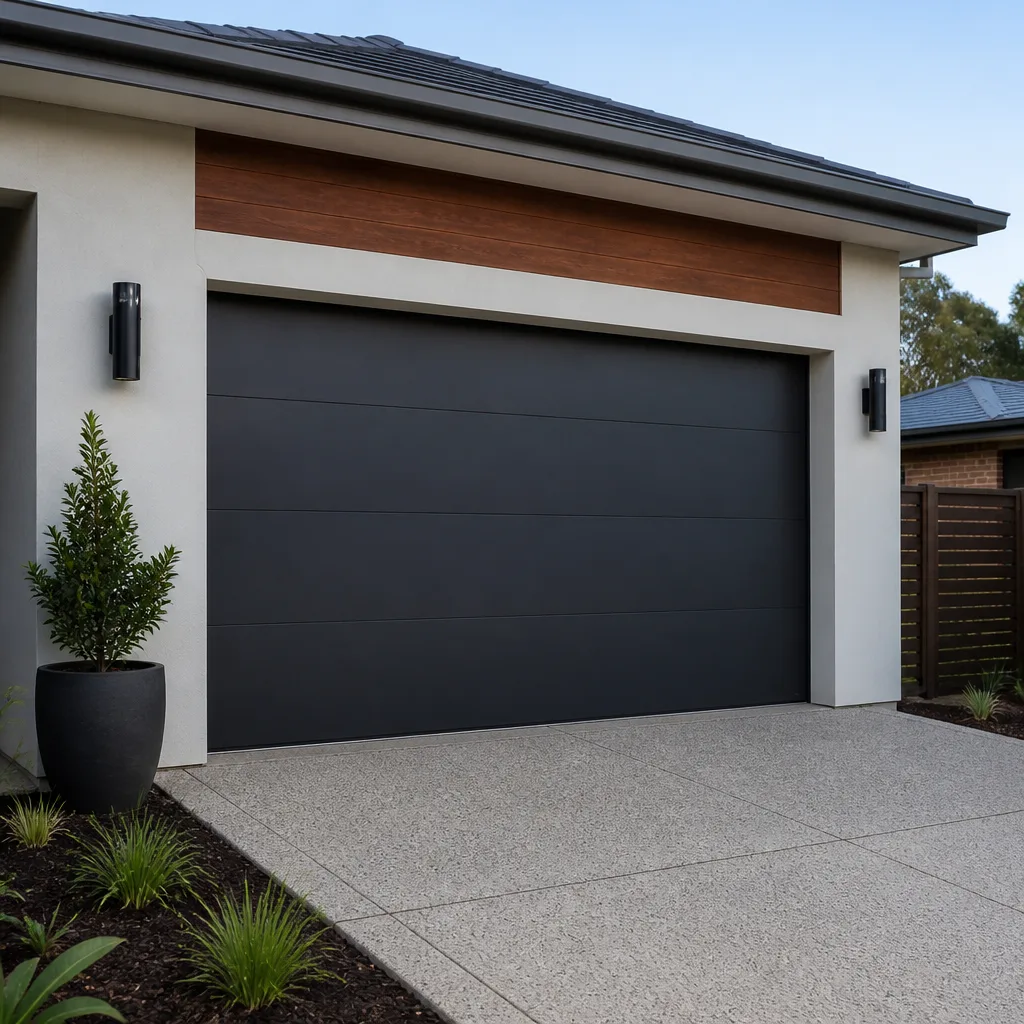 Modern flush
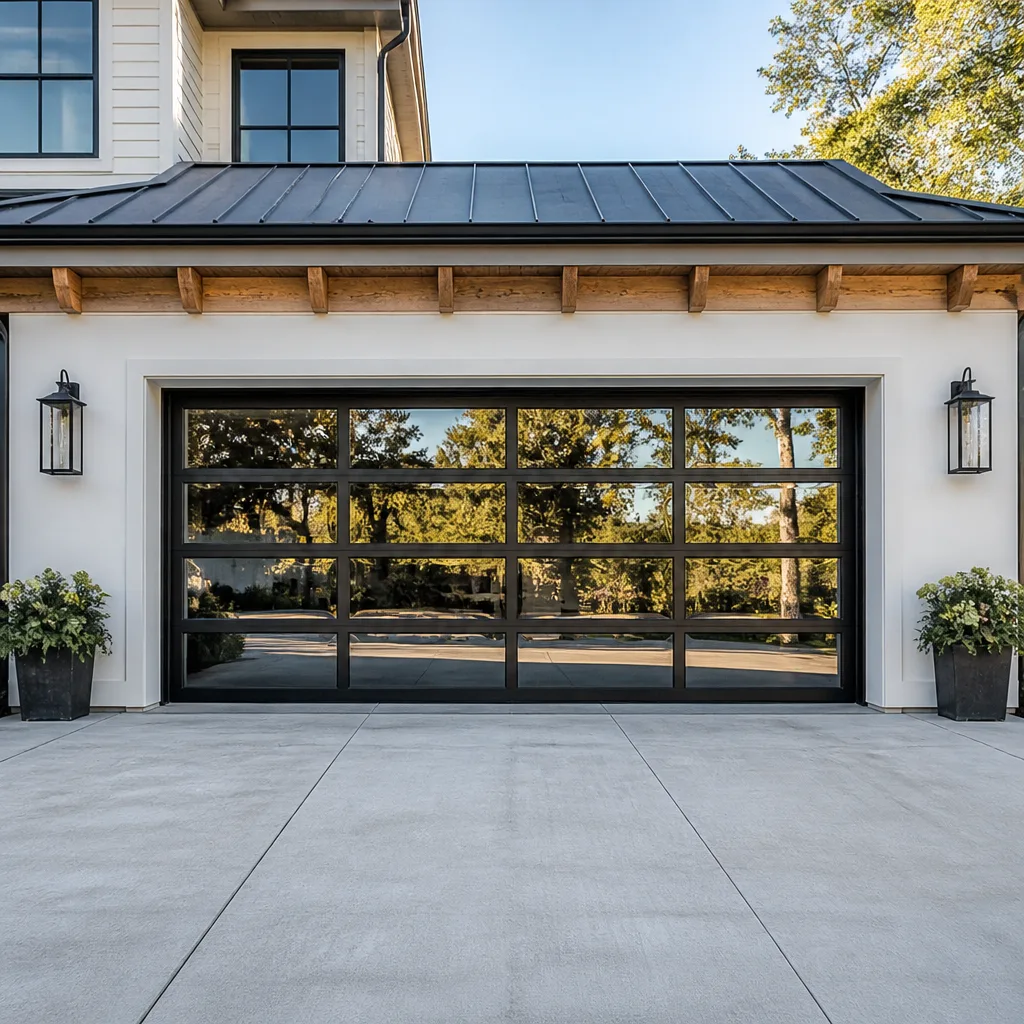 Full-view glass
 LiftMaster openers
 Chamberlain openers
Full 25-point door and opener safety check with every visit - springs, cables, rollers, tracks, and your LiftMaster or Chamberlain opener included
You get a price before we start. It does not change when the pro arrives.
Get your free estimateDIY vs Professional Garage Door: The Aurora Homeowner’s Decision Guide
Most homeowners assume the DIY decision hinges on confidence. It doesn’t. A garage door is a system of eight distinct subsystems bolted together under constant load, and only some of them are safe to touch. The question isn’t whether you’re handy enough – it’s whether you can correctly identify which parts of your door carry stored mechanical energy that can injure you. Torsion springs hold roughly 100 foot-pounds of torque when wound, and that stored energy doesn’t care how careful you are. This guide maps every subsystem of a garage door into safe-to-own and pro-only territory, then explains the three reasons Aurora homes carry extra DIY risk, what a warranty void actually costs, and how to talk to a technician about handling part of the job yourself.
Quick Answer
Hinges, rollers, weather seals, photo eyes, and remote programming are genuinely DIY-safe for a careful homeowner with the right tools. Springs, cables, bottom brackets, tracks under tension, and any work on a door with a broken spring are professional-only because that hardware holds lethal stored energy. For everything in the middle – opener logic boards, sensor alignment, panel replacement, and safety-reverse calibration – a professional call is usually cheaper than the tools and the trial-and-error. Our technicians have up to 11 years of experience and diagnose all eight major brands, so the call to (855) 337-1088 costs nothing to make and the estimate is free.
Styles & brands we work with
- Raised-panel steel
- Carriage house
- Modern flush
- Full-view glass
- LiftMaster openers
- Chamberlain openers
Table of Contents
- The Subsystem Map: What’s Actually Safe to Touch
- Three Reasons DIY Garage Door Work Is Riskier in Aurora
- What a DIY Repair Really Costs When It Voids a Warranty
- The Honest Tool Budget for a Safe DIY Repair
- Springs and Cables: Why Physics Doesn’t Negotiate
- Opener Electronics: Where DIY Usually Hits a Wall
- How to Split a Job With Your Technician
- Aurora Housing Stock and Why Hardware Specs Matter
The Subsystem Map: What’s Actually Safe to Touch
A garage door isn’t one machine. It’s a set of subsystems that each fail independently, and the DIY decision belongs to each one on its own. Treating the door as a single unit is how homeowners end up replacing a weather seal and then, three days later, calling about a door that won’t close. Here’s the map we walk every Aurora homeowner through on a first visit.
Safe to service yourself
- Hinges. Removing and replacing a hinge is a wrench-and-screwdriver job. If a hinge is bent or a screw is stripped, that’s within reach.
- Rollers. With the door fully open and the spring relaxed, rollers slide out of the hinge brackets. Nylon rollers wear and get noisy; swapping them is a homeowner job.
- Weather seals. The bottom seal and the perimeter weatherstripping protect the door from drafts and pest entry. Neither carries stored energy.
- Photo eyes. The two safety sensors near the floor can be wiped, re-aimed, or re-wired to the opener terminals. The door won’t operate at all if they’re blocked.
- Remote programming. Pairing a new remote or keypad to a LiftMaster, Chamberlain, or Genie opener is a ten-minute job with the manual open in front of you.
- Lubrication. The hinge points, rollers, and track surfaces need a garage-door-rated lubricant periodically. No tools required beyond a rag.
Professional-only, no exceptions
- Torsion springs and extension springs. These hold the entire weight of the door. Releasing that energy without the proper winding bars and knowledge is what sends people to the hospital.
- Cables. The lift cables run alongside the springs under the same tension. A cable that slips off a drum can whip with lethal force.
- Bottom brackets. These anchor the cables at the bottom corners of the door. They’re under tension even after the spring relaxes.
- Tracks. Track adjustment looks simple until the door is off its rollers. Realignment on a loaded door is a two-person professional job.
- Anything on a door with a broken spring. A door with a snapped spring no longer has a counterbalance. Even opening it manually means lifting the full dead weight, and the door can come down hard. Leave it closed and call.
- Panel replacement on a stressed door. Swapping a dented Clopay panel means un-weighting the door. The panel itself is simple; the load isn’t.
The line between those two lists is not about skill. It’s about whether the component is holding stored energy while you work on it. That’s the whole test.
Three Reasons DIY Garage Door Work Is Riskier in Aurora
The national DIY garage door injury rate is a real thing, but Aurora-area homes carry three extra layers of risk that a generic safety video won’t mention. If you live in Aurora and you’re weighing a repair yourself, these are the local factors to weigh.
Older hardware specs on older homes
Aurora has a well-established housing stock with plenty of homes built from the mid-20th century onward. Garage doors from those decades often use extension springs instead of torsion springs, single-panel tilt-up designs, and non-standard track profiles. The hardware on those systems doesn’t match what a YouTube tutorial filmed on a modern door will show you. Worse, some older doors use safety cages and strap configurations that a homeowner won’t recognize, and removing them without understanding the load can release stored energy in a direction nobody planned for.
Cold-weather brittleness
An Aurora winter drives thermal cycling through every moving part of a garage door. Cold stiffens the steel in the springs, ages the lubricant on the rollers, hardens the rubber weather seal, and makes plastic and nylon components more likely to crack under load. That means a repair that felt smooth in a warm garage in summer can behave very differently on a January morning. A spring that’s already near the end of its cycle count doesn’t fail gently in cold – it snaps, and that’s when the door becomes dangerous to touch. This is why we get more spring calls in Aurora in the coldest weeks than in any other stretch of the calendar.
Mismatched part sourcing
Big-box stores stock a narrow range of springs, rollers, and cables, and the hardware you buy off a shelf often doesn’t match the wire gauge, drum size, or torque rating of what’s on your door. An under-spec spring carries more load per cycle and fails sooner; an over-spec spring can force the opener to fight the door. Our technicians look up the original spec by brand and model before recommending a replacement. If the door is a Clopay, Amarr, or Wayne Dalton, the spring is rated for that specific door weight, and the off-the-shelf unit usually isn’t.
What a DIY Repair Really Costs When It Voids a Warranty
A DIY repair that voids a manufacturer warranty can cost more than the entire repair would have. On a garage door, the manufacturer warranty typically covers the door panels, the springs, and the hardware against defects. Most of those warranties explicitly void if the door is serviced by anyone other than an authorized service provider, or if non-standard parts are installed. The result is a repair that saves a small amount today and exposes you to a full-panel or full-door replacement later.
In our experience across Aurora service calls, a voided warranty most often bites when a spring is swapped with a big-box part. The spring itself is affordable, but if that improper install bends a hinge plate or warps the drum, the door often needs more than a spring – it may need a full spring, cable, and hinge-plate overhaul, or a full door replacement. That’s a jump from a typical spring repair range into a full-installation range. The numbers to keep in mind:
| Outcome | What you actually pay |
|---|---|
| DIY spring repair with a mismatched part | Cost of the wrong part + risk of injury + warranty void |
| Same job, pro install, warranty intact | Typical spring repair range, quoted before work starts |
| Resulting damage: drum, cable, hinge plate | Multiple repair lines on a single service call |
| Worst case: warped track, panel damage | Full-door replacement range instead of a repair range |
The pattern is consistent: the DIY shortcut rarely saves money once you factor in warranty loss. Our garage door spring repair technicians see this outcome often enough that we quote it plainly to every caller – and we tell you honestly when a DIY-safe subsystem can stay in your hands.
The Honest Tool Budget for a Safe DIY Repair
A competent homeowner can build a garage door repair toolkit for the safe subsystems, and the cost of entry is real – but it’s modest. Here’s what a hinge or roller replacement actually needs, with the honest cost comparison to a single professional service call.
- Socket set (SAE and metric). Hinges and roller brackets use a mix of hex-head and Phillips screws. A full set covers everything. Typical cost: $30-$60.
- Screwdriver set. Phillips and flathead drivers for the hinge screws and the roller brackets. Typical cost: $15-$30.
- Step ladder. You’ll need to reach the upper hinges and the top roller brackets. Typical cost: $40-$100 if you don’t already own one.
- Garage-door-rated lubricant. Silicone or lithium grease, not WD-40. Typical cost: $10-$15.
- Vise-Grip pliers. For holding a roller bracket steady while you turn the screw. Typical cost: $15-$25.
- Safety glasses and work gloves. Non-negotiable. Typical cost: $10-$20.
Total tool budget for a well-prepared homeowner: roughly $120-$250, and much of that is one-time – the socket set and ladder go into the toolbox and stay there. A single professional call for a hinge or roller swap is typically less than the tool budget, and it comes with the door inspected by a technician who knows it. Our garage door repair service handles hinge and roller work at a fair per-job rate. If you have the tools already, DIY is a fine choice. If you’d be buying the socket set and ladder for the first time, one service call is usually the cheaper route.
Springs and Cables: Why Physics Doesn’t Negotiate
A wound torsion spring stores roughly 100 foot-pounds of torque, and that force is released the moment the spring is loosened without the proper winding bars. There is no tool a homeowner can buy off a shelf that safely controls that energy; the winding bars professional technicians use are specific to the spring drum, and the technique for releasing tension is one that requires training. This isn’t a caution we invented for the sake of pitching a service.
What the physics means in practice:
- The spring, not the opener, lifts the door. The opener only pulls; the counterbalance does the work. If the spring fails, the door becomes dead weight.
- Extension springs can fail with a bang. If an old extension spring breaks and the safety cable isn’t installed correctly, the spring can whip across the garage. The safety cable is a code requirement in many Aurora-area homes, and it’s the difference between a harmless break and a dangerous one.
- Cables share the tension. A cable that slips off its drum can release control of the door and the spring at the same moment.
- A door with a broken spring should stay closed. If you hear a bang and the door won’t open, call – don’t force it.
Because spring work is dangerous enough that many general contractors won’t touch it, we treat it as a dedicated service. Our team handles the spring, the cables, and the drum in one visit. Safety is not a step you can skip or shortcut, and the door must be unweighted and re-weighted to spec. The local pro we connect you with is state-licensed and insured, and the price is quoted and agreed before any work starts. For spring and cable work specifically, the right question isn’t “can I do this myself?” – it’s “how soon can a trained technician get here?”
Opener Electronics: Where DIY Usually Hits a Wall
Opener electronics are the confusing middle. Replacing a battery in a remote, re-pairing a LiftMaster or Chamberlain remote, and clearing a photo-eye obstruction are all genuinely DIY. But once the question turns to logic boards, travel limits, force settings, safety-reverse calibration, or a Genie opener that has lost its Wi-Fi pairing, the DIY failures start to look familiar.
Safe to try yourself
- Replacing remote batteries and re-pairing remotes and keypads.
- Wiping and re-aiming photo eyes that have been knocked out of alignment.
- Resetting a Wi-Fi opener that has dropped from the network (usually a power cycle and a re-pairing in the manufacturer’s app).
Where DIY stalls
- Logic boards. A board failure often looks like a motor failure. Diagnosing which one it is requires brand-specific knowledge.
- Travel limits and force settings. A travel limit that’s out of range causes the door to reverse short or overshoot; changing it without measuring correctly can make the door close without reversing, which is a safety hazard.
- Safety-reverse calibration. The opener must reverse when it meets an obstruction. If this is out of calibration after a DIY adjustment, the door can close on an object – or a person.
- Wiring. If a photo eye or wall console needs new wire run, the low-voltage work is straightforward but not always simple to route cleanly through a garage wall.
For a Chamberlain or Genie that’s older or out of production, a replacement is often more sensible than a logic board and drive gear swap. If you’re the type of homeowner who’s already comfortable in the manufacturer’s app, you’ll do well with remote and Wi-Fi work. For anything that changes door travel or force, our garage door opener repair team walks Aurora homeowners through what’s safe to keep and what to hand over.
How to Split a Job With Your Technician
Most reputable Aurora contractors will work with you on splitting a job, and the honest conversation is easier than you’d think. Here’s what we walk every homeowner through.
- Say what you want to handle yourself. Hinges, rollers, weather seals, and photo-eye cleaning are fine to keep. Say so up front and the technician will note it on the work order.
- Be clear on what you’re not touching. Springs, cables, and anything under load should be the technician’s responsibility. The conversation should never include the words “I’ll just loosen this spring myself.”
- Ask for a written scope of work. The written estimate should list every part being replaced and every part left alone. That’s the document that matters if anything goes wrong later.
- Ask what parts you’re keeping vs. replacing. If you’re replacing a hinge, the technician will buy the hinge from a matching part catalog for your door’s brand and model. If you’re keeping a hinge, that’s a note on the work order, not a hidden surprise.
- Agree the price before work starts. Every job is quoted and agreed up front. The final price is the price on the written estimate; nothing on the invoice should surprise you later.
This is how we’ve structured every job for homeowners who ask. The split is common in Aurora. Our Garage Door Repair Aurora Pros technicians quote per job by written estimate and are happy to leave hinge or roller work in your hands while they handle the parts that carry stored energy.
Aurora Housing Stock and Why Hardware Specs Matter
Aurora’s housing ranges widely, from mid-century homes with single-panel tilt-up doors to newer construction with modern sectional doors and smart openers. That variation is why a local technician’s experience with your specific hardware matters more than a generic repair video.
What we see across Aurora neighborhoods – on the city’s east side, near the downtown core, and out toward the growing western subdivisions – is a mix of three door ages:
- Older extension-spring doors. Common in the older neighborhoods. These carry springs on the sides of the door rather than overhead, and the DIY guidance for them differs from a modern door.
- Mid-era torsion-spring doors. Common in homes built in the last few decades. Torsion springs overhead, standard drums, standard track.
- Modern smart-opener doors. The newer Aurora developments often use LiftMaster or Chamberlain openers with Wi-Fi modules and LED lighting. The door hardware is standard, but the opener electronics are brand-specific.
The three layered risks – old hardware, cold-weather brittleness, and mismatched parts – stack in Aurora’s older homes. A 1960s extension-spring door with hardened rubber seals in February is the scenario where a DIY repair hurts someone. Our technicians have up to 11 years of experience across those door types and all eight major brands, and we carry the knowledge forward to every Aurora call.
Common Mistakes to Avoid
- Trying a spring repair without winding bars. A homeowner who tries to loosen a torsion spring with a screwdriver or a pipe wrench is working against a spring that can release energy without warning. The proper winding bars cost a fraction of the injury; either buy them or call a professional.
- Buying off-the-shelf springs without matching the wire gauge. A spring from a big-box store rarely matches the torque rating of the original. In Aurora’s cold winters, an under-spec spring fails sooner, and the failure can happen while the door is moving.
- Lubricating the tracks with WD-40. The track needs a dry lubricant or a garage-door-rated product. WD-40 collects dust and grime, which makes rollers stickier, not smoother. Dish soap and water on a rag is the standard track-cleaning method.
- Adjusting travel limits without checking the safety reverse. A door that closes without reversing on contact is a hazard to anything under it. Aurora homeowners who adjust the limits themselves should always test the reverse function with a roll of paper towels after.
- Forcing a door with a broken spring. A door that has lost its counterbalance should stay closed. Trying to lift it manually means lifting the full dead weight, and the door can fall.
- Ignoring a photo-eye that’s been bumped. If the wall console flashes a warning light and the door won’t close, the photo eyes are likely out of alignment. This is DIY-safe – re-aim them rather than bypassing them.
- Waiting to replace an aging door panel because it’s cosmetic. A dented or rotted panel on a door approaching the end of its service life is a structural matter, not a paint job. The panel swap requires un-weighting the door.
See the difference
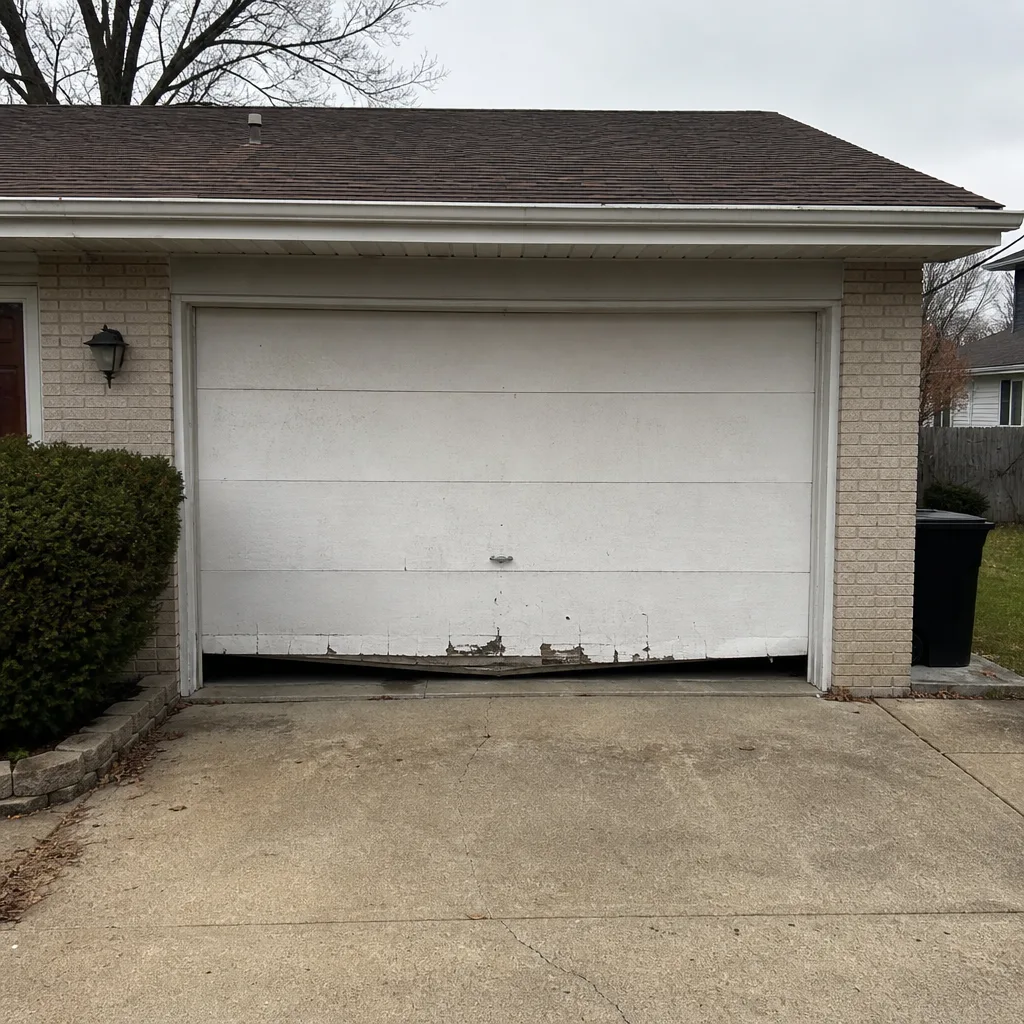 Before
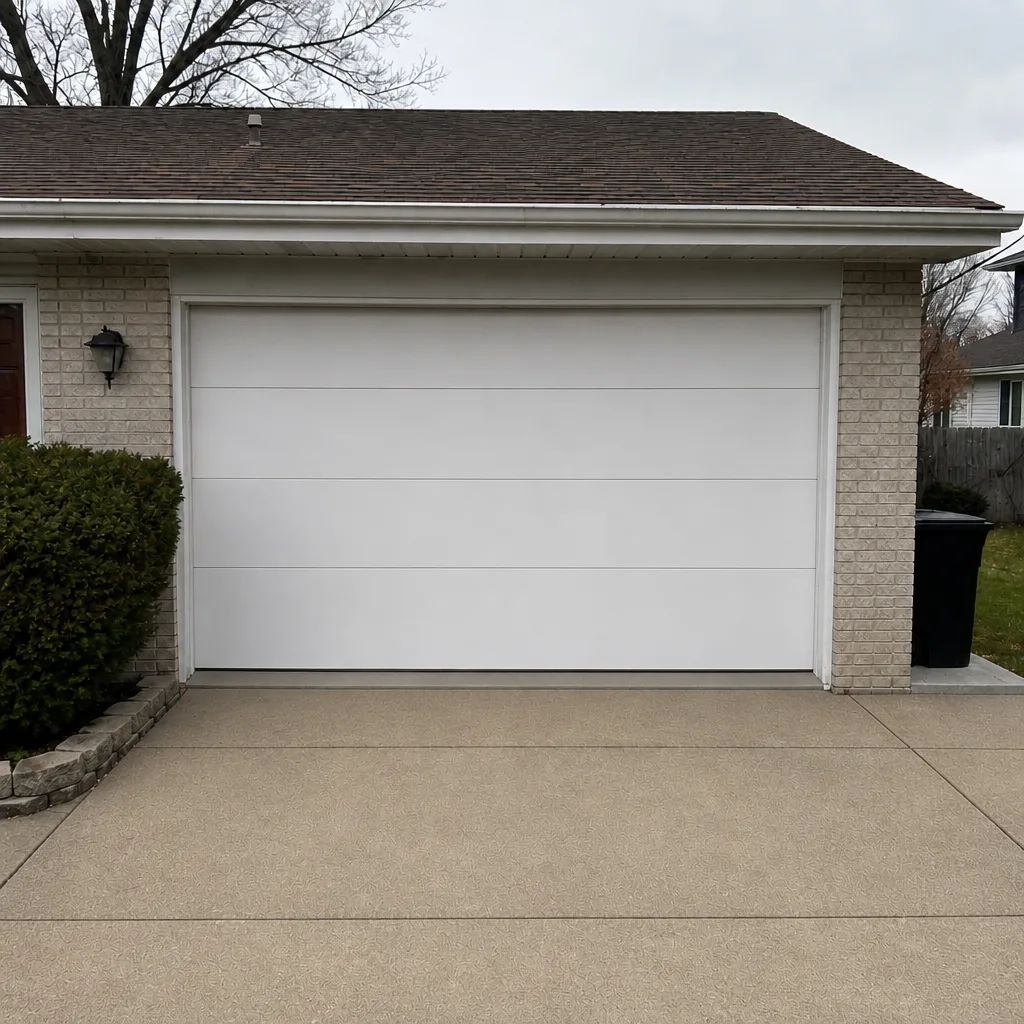 After
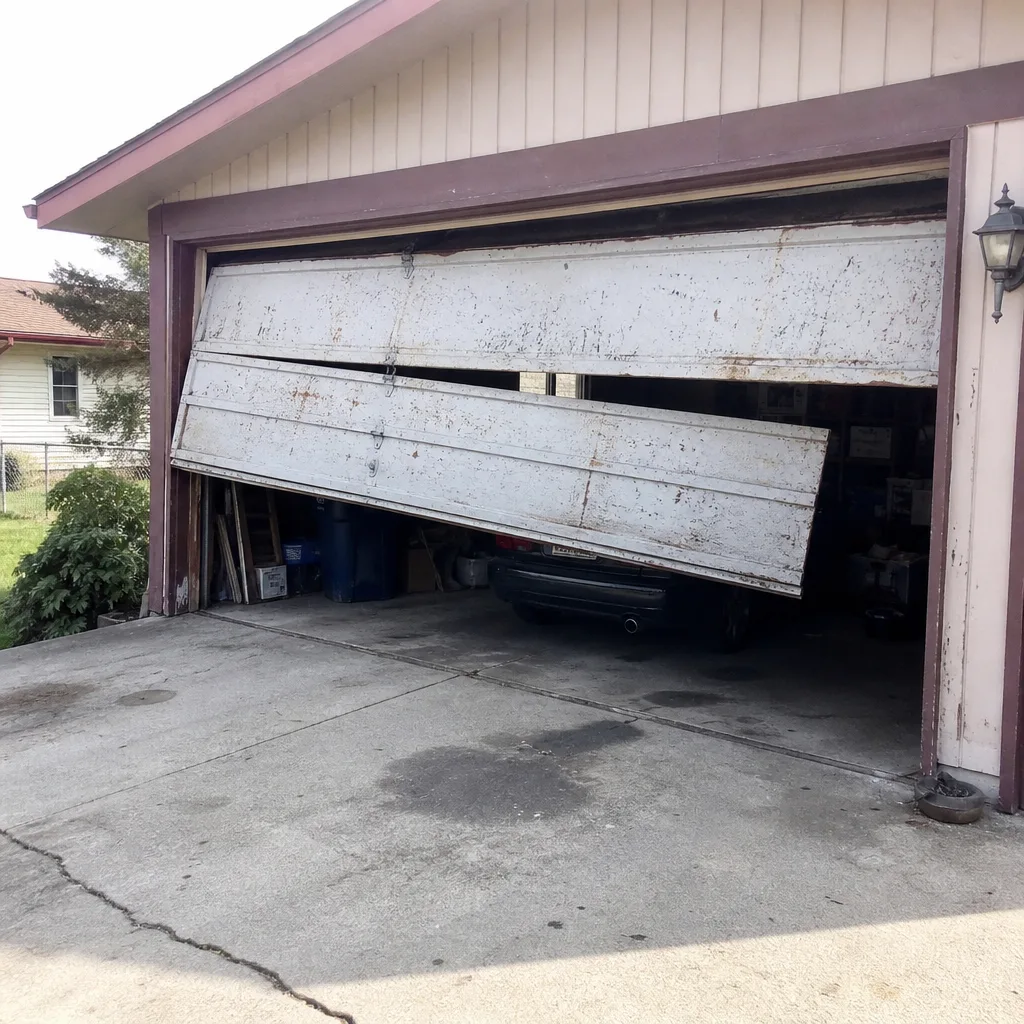 Before
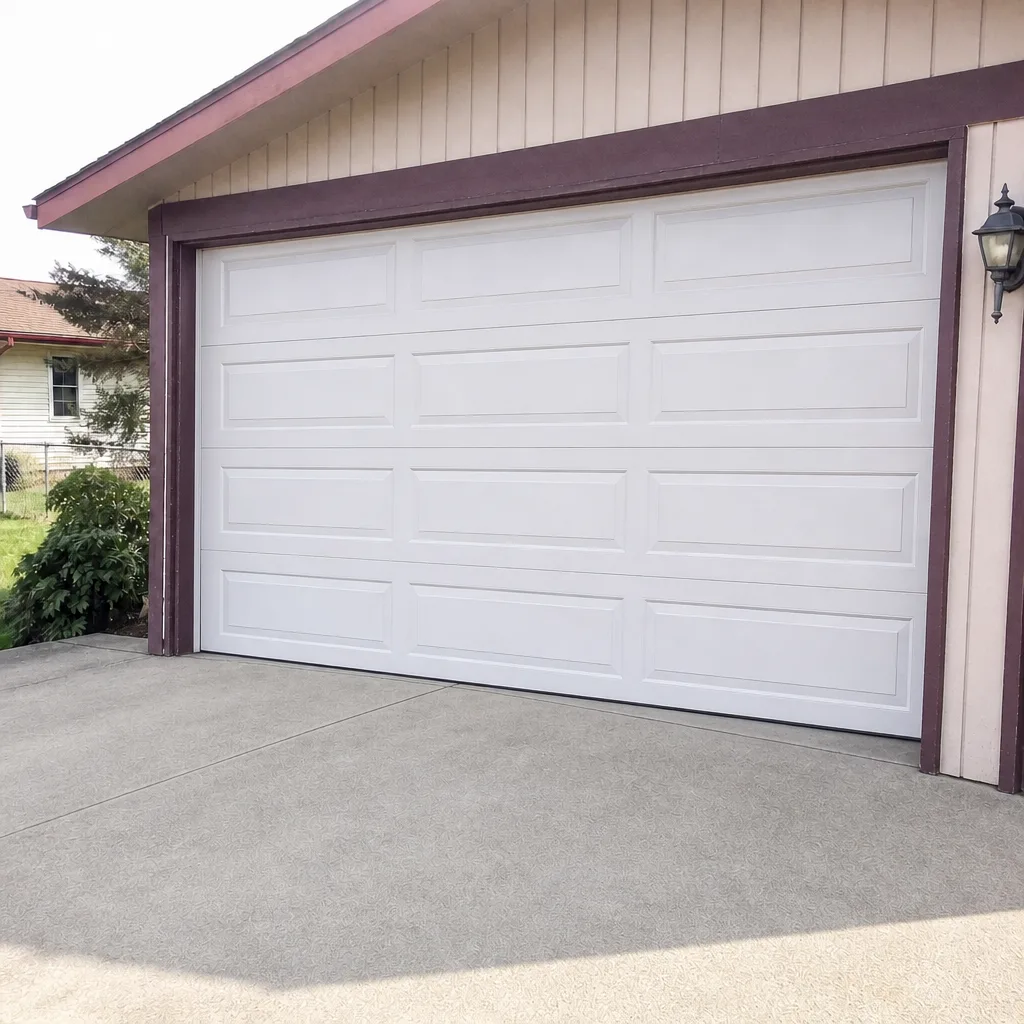 After
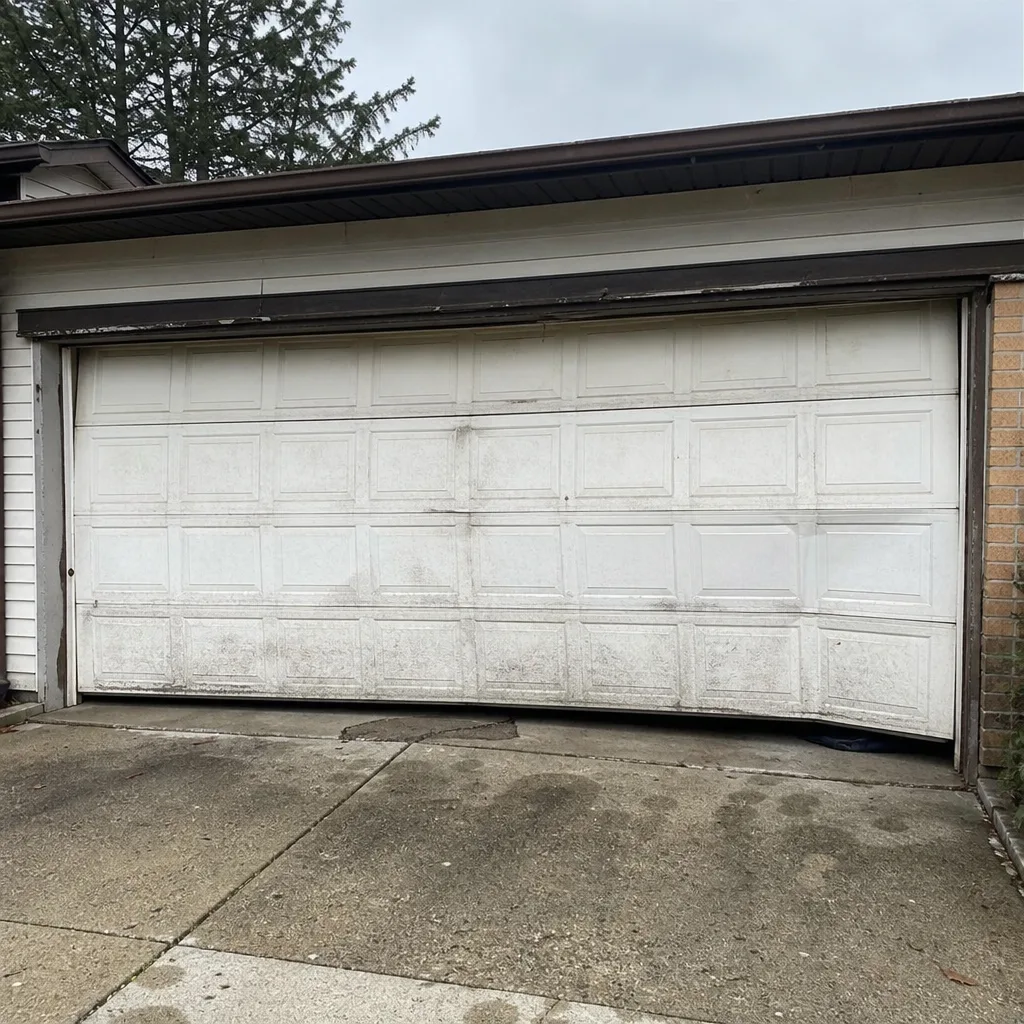 Before
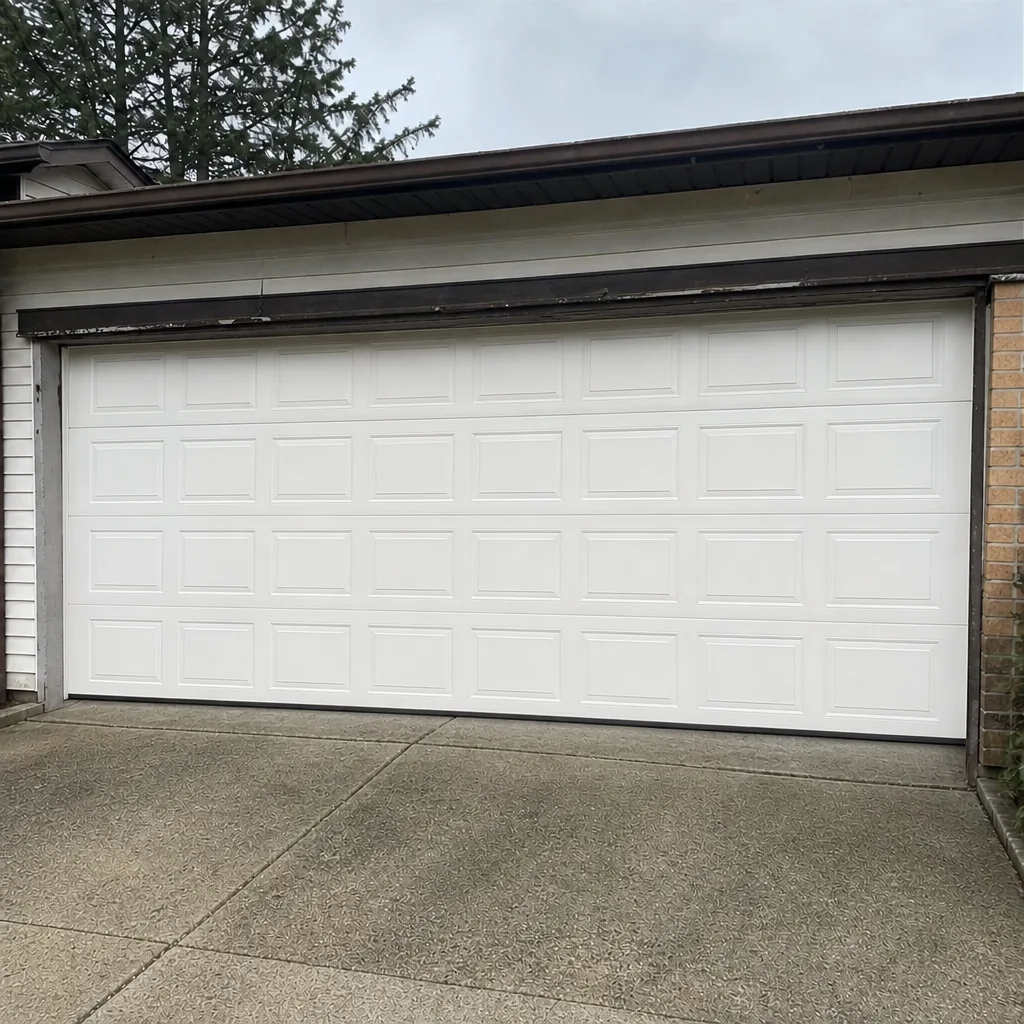 After
When to Call a Professional
Call a professional immediately if the door won’t open or close, a spring has snapped, a cable is frayed or off its drum, the door has come off its tracks, or a panel replacement is needed. Those are the scenarios where stored energy or a structural load is in play. Call for the spring, the cable, the drum, the bottom bracket, and any work on a door with a broken spring. Our garage door spring repair team handles the dangerous subsystems, and our garage door repair service picks up everything else. Same-day service is available when you can’t wait. Garage Door Repair Aurora Pros offers free estimates in Aurora – call (855) 337-1088. We answer 24/7. Fast dispatch from 7am to 7pm, Sunday through Friday.
Frequently Asked Questions
No – replacing a garage door spring yourself in Aurora is unsafe. A wound torsion spring holds roughly 100 foot-pounds of torque, and releasing that energy without proper winding bars is what causes serious injury. Even a careful homeowner can’t safely manage that energy alone, so call a professional for spring work. For an exact quote, call (855) 337-1088. Estimates are free.
Yes – roller and hinge replacement is safe for a careful homeowner with the right tools. With the door fully open and the spring relaxed, rollers slide out of their brackets and hinges come off with a socket set. The tool cost is modest and the job takes an afternoon. Call (855) 337-1088 for a repair quote if you’d rather have it done.
If the safety reverse stops working, the door can close on an object or a person, and that door should not be operated. Test the reverse function after every adjustment by placing an object in the door’s path; if it doesn’t reverse, stop using the opener and call. Our opener technicians in Aurora diagnose this safely. Call (855) 337-1088 for a free estimate.
A DIY repair can void your door’s manufacturer warranty if it involves non-standard parts or un-authorized service. Most manufacturer warranties cover the panels and springs against defects only when serviced by a recognized provider; a swapped spring or a modified track can end that coverage. The cost of a voided warranty usually outweighs the money saved. Call (855) 337-1088 to have the repair done correctly.
Garage door repair in Aurora is priced per job by written estimate; typical ranges cover spring repair, opener repair, and general hardware work. Every job is quoted and agreed before any work starts, so the final price is the price on the estimate. For an exact quote, call (855) 337-1088. Estimates are free.
You can safely pair remotes, re-pair Wi-Fi on a LiftMaster or Chamberlain opener, and re-aim photo eyes yourself. Anything that changes the door’s travel limits or force settings should go to a professional, because a miscalibrated safety reverse is a hazard. Our technicians handle opener repair across all eight major brands. Call (855) 337-1088 for a free estimate.
The Bottom Line
The DIY vs. professional question is a question about stored energy, not confidence. Hinges, rollers, weather seals, photo eyes, and remote programming are genuinely safe for an Aurora homeowner to own. Springs, cables, bottom brackets, and tracks under tension are not – not because the job looks hard, but because the physics doesn’t allow a homeowner to control that stored energy safely. Aurora’s older housing stock and cold-weather brittleness make the DIY risk higher here than the national average, and a voided manufacturer warranty rarely pays back the shortcut. If you can name the subsystem, you can make the call. For the ones under load, call us. Our technicians have up to 11 years of experience across every major brand.
Call (855) 337-1088 for a free estimate. We answer 24/7. Fast dispatch from 7am to 7pm, Sunday through Friday. Every job is quoted and agreed before any work starts.
Written by the team at Garage Door Repair Aurora Pros.