
Last updated November 21, 2026
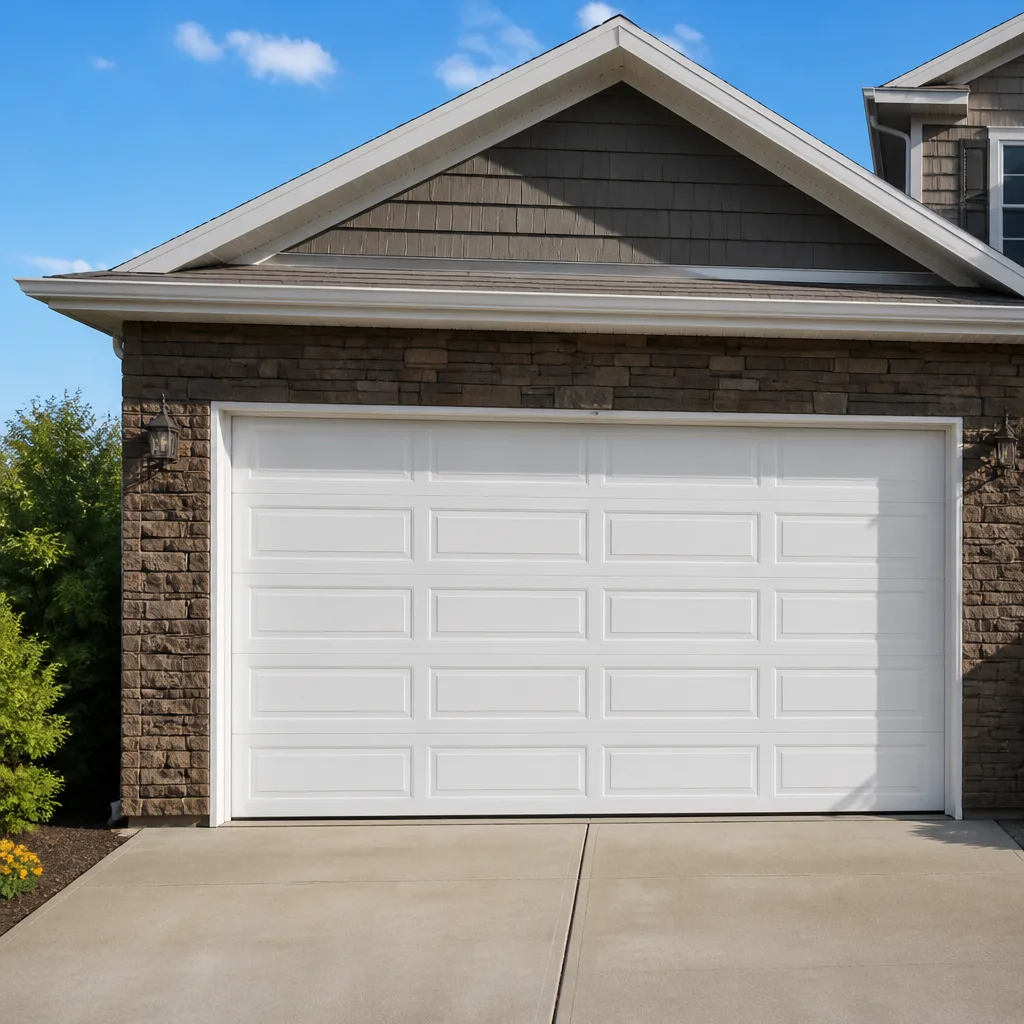 Raised-panel steel
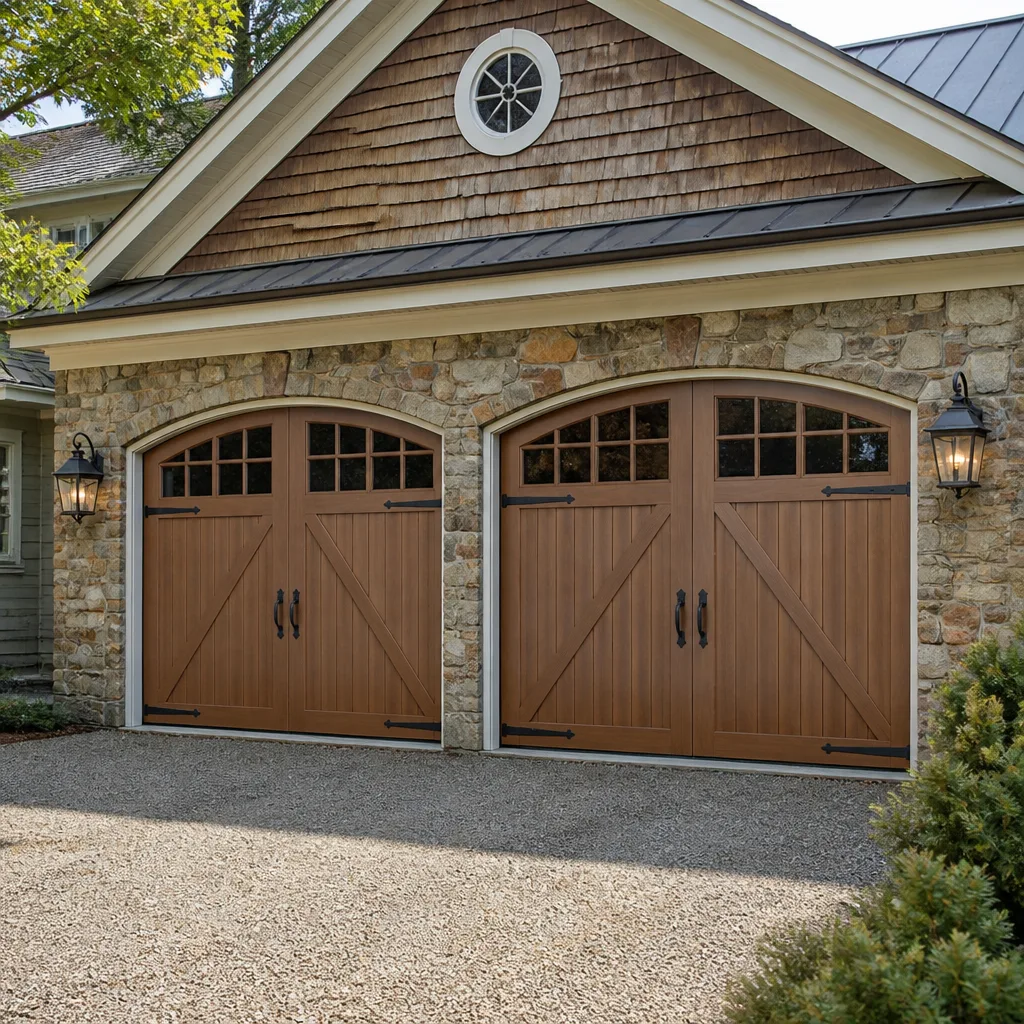 Carriage house
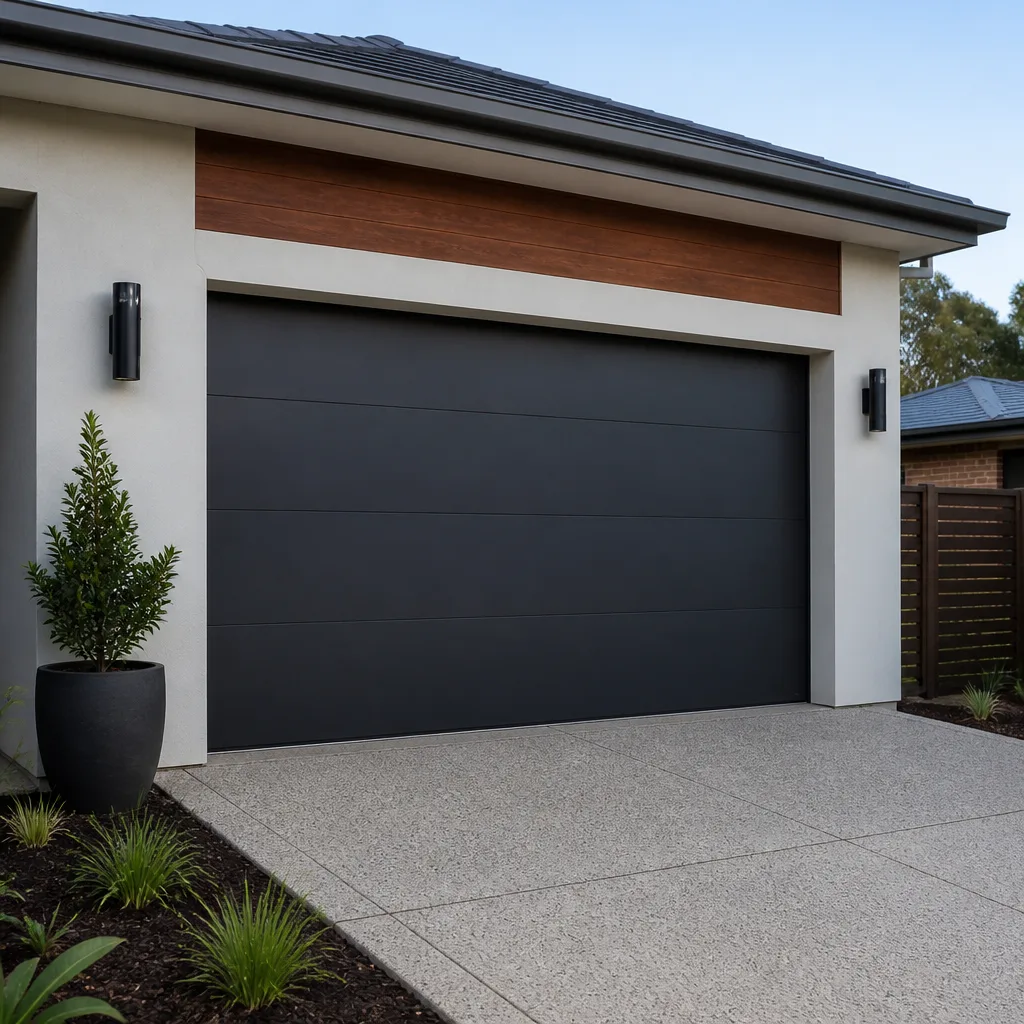 Modern flush
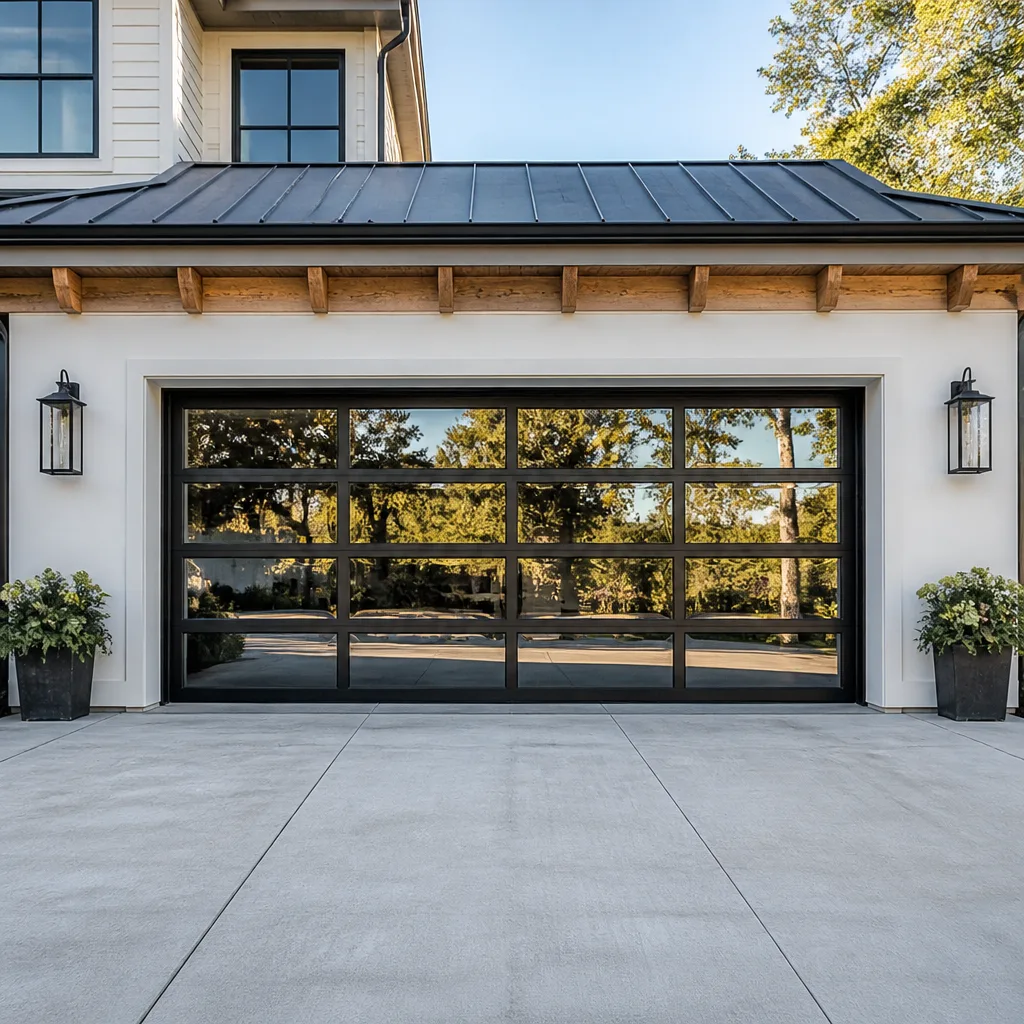 Full-view glass
 LiftMaster openers
 Chamberlain openers
Full 25-point door and opener safety check with every visit - springs, cables, rollers, tracks, and your LiftMaster or Chamberlain opener included
You get a price before we start. It does not change when the pro arrives.
Get your free estimateSeasonal Garage Door Care for Aurora: Year-Round Homeowner’s Guide
The garage door failures that happen in January were almost always set up in October. That’s the part most maintenance advice misses. A door that groans through a cold snap or stalls halfway down on a February morning usually isn’t failing because of that morning – it’s failing because of a loosened spring, dried-out seal, or worn roller that went into the freeze season unready. Aurora’s weather doesn’t follow one clean curve, either. It moves through four distinct stress periods, and each one attacks different parts of the system. This guide breaks down exactly what to do before winter, what to check after the thaw, what summer humidity does to your panels, and how to time your fall prep to Aurora’s first hard freeze. You’ll leave knowing the tasks, the order, and the signals that mean it’s time to call.
Quick Answer
Seasonal garage door care in Aurora means matching maintenance to four weather phases: pre-freeze prep in late fall (seal, lubrication, spring and tension check), post-thaw inspection in March (salt residue, frost heave, opener sensitivity), humidity monitoring in summer (swelling vs. misalignment), and a fall checklist timed to Aurora’s typical mid-November hard freeze. The single best seasonal benchmark is your door’s auto-reverse force test – if the number needed to reverse the door shifts noticeably from one season to the next, something is developing and needs a professional look.
Styles & brands we work with
- Raised-panel steel
- Carriage house
- Modern flush
- Full-view glass
- LiftMaster openers
- Chamberlain openers
Table of Contents
- Why Aurora Doors Fail on a Seasonal Clock
- Pre-Winter Prep: The October Checklist That Protects January
- Post-Winter Spring Tasks: Salt, Frost Heave, and Opener Reset
- Summer Humidity: Swelling, Steel, and What Misalignment Actually Looks Like
- Fall Preparation: Week-by-Week Before Aurora’s First Hard Freeze
- The Auto-Reverse Force Test as a Seasonal Benchmark
- Seasonal Task and Cost Reference
- The Monthly Rhythm: A Simple Twelve-Month Schedule
Why Aurora Doors Fail on a Seasonal Clock
Aurora sits in a climate with wide temperature swings and a freeze-thaw cycle that runs hard through winter and into early spring. That matters to your door because almost every component in the system is either metal that expands and contracts or a rubber or wood-composite part that reacts to moisture and temperature. Steel panels flex more in July than they do in January. A bottom seal that stays pliable at 80 degrees hardens at 10 degrees and stops sealing. Grease thickens. Springs lose tension as they cycle through temperature extremes. None of these things fail all at once. They degrade on a schedule, and the schedule is set by the weather.
We work on garage doors across Aurora, from older homes near the river to newer construction on the city’s edges, and the pattern is consistent: the majority of winter failures trace back to something that was already loose, dry, or misaligned before the first freeze. That’s why this guide is organized by season rather than by “check it twice a year.” Twice is not enough here. Each phase puts different demands on the door, and each phase needs its own inspection.
One more reason this matters: your garage is likely the main entry point to your home. When the door won’t close, your house is exposed and your car is stuck. Seasonal care is really about keeping that entry reliable. If you want the broader service picture, our Garage Door Repair Aurora Pros page covers what we handle across the whole system – springs, openers, panels, tracks, and full installations.
Pre-Winter Prep: The October Checklist That Protects January
The October work is the highest-value maintenance of the year in Aurora, because it’s the last chance to catch problems before the freeze locks them in. Once the ground freezes and temperatures drop hard, small issues get harder to fix and more likely to turn into emergencies. Work through these six items in order before the first hard frost.
- Inspect and condition the bottom seal. The bottom seal (also called the bottom weather seal or astragal) keeps cold air, snow, and moisture out. Run your hand along its length and look for cracks, flattening, or gaps at the floor. A seal that’s hardened or torn should be replaced before winter – it’s the cheapest part in the system and the one most exposed to cold.
- Lubricate with low-temperature grease. Standard grease thickens in cold weather and can make the door sluggish. Use a low-temperature garage door lubricant on the hinges, rollers, and torsion springs. This is one of the few tasks where the product choice matters as much as doing it – using the wrong grease can make winter operation worse.
- Check spring tension and cycle count. Springs are the mechanical heart of the door and the most dangerous component to touch. Visually inspect for gaps, rust, or sagging in the coils. Don’t attempt to adjust tension yourself – this is a trained-professional job and one of the most common serious-injury repairs in the trade. If the door feels heavy to lift manually or sounds different, schedule an inspection. Our garage door spring repair page explains what a matched pair replacement involves.
- Test the auto-reverse and record the force number. This is your seasonal benchmark (see the dedicated section below). Test it in October and write down the number.
- Clear the tracks and check alignment. Remove debris from the tracks, check that the vertical and horizontal sections line up, and make sure the door runs smoothly by hand. Small misalignments become big ones when the metal contracts.
- Inspect the opener and sensors. Test the safety sensors by passing an object through the beam. If the opener is a smart-home-integrated model – LiftMaster and Chamberlain are the two most common connected systems we see – check that the Wi-Fi connection is stable and the battery backup (if equipped) is holding charge. Connected openers can be a real advantage in winter, letting you check door status remotely. Our garage door opener repair page covers the electronic side in more detail.
Get this done in October and you’ve protected the system through the worst of the year.
Post-Winter Spring Tasks: Salt, Frost Heave, and Opener Reset
March and April are the recovery season in Aurora. Winter leaves behind salt residue, moisture, and mechanical stress, and the thaw exposes problems that were hidden under frozen ground. This is when we see the most “it was fine all winter and now it’s stuck” calls. Three tasks matter most.
Salt residue removal
Road salt and de-icing products get tracked onto the garage floor and kicked up onto the bottom of the door, the hinges, and the lower tracks. Salt is corrosive to metal hardware. In spring, wipe down the lower hardware (hinges, bottom brackets, track sections) with a damp cloth and re-lubricate afterward. Don’t use a pressure washer on the door – it forces water into places that shouldn’t get wet. A hand wipe and a fresh application of lubricant is enough.
Track realignment after frost heave
Freeze-thaw cycles move the ground under your garage floor and driveway. That movement can shift the bottom of the vertical tracks slightly out of plumb, which makes the door bind or scrape. Check that the tracks are straight and parallel, that the door runs evenly, and that there’s no rubbing sound. If the tracks are visibly bent or the door binds, that’s a pro-level adjustment – bending a track back by hand usually makes it worse.
Opener sensitivity reset
Your opener’s force and travel limits are set to a tolerance. After a cold winter, a door that ran fine in November may trigger the opener’s built-in safety reverse more easily in spring because the hardware is now slightly different. Many openers need a sensitivity reset after the season. If your Genie or LiftMaster opener is stopping and reversing for no obvious reason, the force limits may need re-teaching. This is also a good time to re-run the auto-reverse test and compare the number to your October reading.
If the door gets stuck or reverses and won’t cooperate, our garage door repair service can sort the mechanical and electronic sides in one visit.
Summer Humidity: Swelling, Steel, and What Misalignment Actually Looks Like
Summer in Aurora brings humidity, and humidity affects different door materials in different ways. Understanding what’s actually happening helps you tell a harmless seasonal change from a real problem.
- Wood-composite and wood doors swell. Moisture absorption causes wood and wood-composite panels to expand slightly. You may notice the door fitting a little tighter, or the sections no longer lining up perfectly.
- Steel doors move, but differently. Steel expands with heat and can develop a slight bow or a change in how the panels meet. The tracks may need a micro-adjustment.
- Weather seals soften. The rubber seals get pliable again, which is good, but it also means a seal that was masking a gap in winter might reveal it now.
Swelling vs. misalignment: how to tell them apart
Swelling from humidity usually shows up as the door feeling tighter in the tracks, or sections that sit slightly differently but still operate. It tends to be even across the door and reverses when the weather dries out. Misalignment shows up as binding on one side, scraping sounds, a door that runs unevenly, or a gap that’s worse on one corner. Misalignment doesn’t reverse when it dries out. If you see binding or scraping on one side, or the door runs crooked, that’s mechanical, not moisture, and it needs attention. A Clopay or Amarr steel door handles this differently than a wood-composite door, so the material tells you a lot about what to expect.
Summer is also a good time to re-run the force test, since the door operates more easily in warm weather and the baseline should be at its lowest.
Fall Preparation: Week-by-Week Before Aurora’s First Hard Freeze
Aurora’s first hard freeze historically lands in mid-November. Work backward from that date and you get a simple schedule that gets everything done without a rushed week. Here’s how we’d sequence it.
- Four to five weeks out (early-to-mid October): full inspection. Run through the October checklist above, including the force test and a spring inspection. Note anything that needs replacing so you can order parts or book a professional before the rush.
- Three weeks out: seal and weatherstrip replacement. Replace the bottom seal and any weatherstripping that’s worn. This is the door’s barrier against cold air and snow, and it’s easiest to replace before the cold makes the rubber stiff.
- Two weeks out: lubrication and hardware check. Low-temperature grease on hinges, rollers, and springs. Tighten any loose hinge screws and check the rollers for flat spots or wear.
- One week out: opener check and force test. Re-run the auto-reverse test and compare to the summer reading. Confirm the opener’s sensitivity, travel limits, and (for smart models) battery backup are set for cold weather.
- Final days: clear the floor and test the seal. Clear debris and salt from the garage floor, test that the bottom seal meets the floor evenly along its whole width, and do a final operation test.
If a step turns up a spring that’s sagging, a bent track, or an opener that reverses on its own, book a professional before the freeze. Getting it fixed in October is far easier than in the middle of a cold snap. A Wayne Dalton or Raynor door follows the same sequence – the timing is about the weather, not the brand.
The Auto-Reverse Force Test as a Seasonal Benchmark
The auto-reverse force test is the single most useful thing you can do seasonally, because it gives you a number you can compare across the year. Every opener has a sensitivity setting that determines how much force it takes before the door reverses. When the door meets an obstruction, it should reverse. When you test it against resistance, it should also reverse at a set force. That force number is a health reading for the whole system.
How the test works
Most openers have a re-test method (check your opener’s manual – Genie, LiftMaster, and Chamberlain all use slightly different procedures for triggering the test). In general, you place a solid object under the door, run the door down, and confirm it reverses on contact. Some openers give you a diagnostic reading of the force needed. Either way, record the result.
What the number tells you
- Consistent number all year: the system is healthy.
- Gradual seasonal drift: normal – friction changes with temperature.
- Sudden shift between seasons: something is developing. A door that suddenly needs more force to reverse, or reverses too easily, is signaling a worn spring, a binding track, or a fading opener. That’s when to call a professional.
- Door reverses on its own: stop using the door and get it checked. This is a sign the force settings or a mechanical component has changed.
The force test is the closest thing this system has to an oil-change light. It’s simple, it’s free, and it catches problems before they strand you. It’s also the one test we’d recommend running four times a year – once at the start of each seasonal phase. If you ever feel the door binding, or the opener strains, call (855) 337-1088. We answer 24/7. Fast dispatch from 7am to 7pm, Sunday through Friday.
Seasonal Task and Cost Reference
The work in this guide splits into two categories: things you can do yourself (lubrication, wiping down hardware, running the force test) and things that need a professional (spring work, track realignment, opener electronic repair, seal replacement on some doors). Here’s how the professional work typically breaks down in cost.
| Task | Typical Estimated Range | Season |
|---|---|---|
| Spring inspection (visual, non-intrusive) | Often free or included with a service visit | Any |
| Single torsion spring replacement | Typically $150 – $300 per spring | Fall / Spring |
| Matched pair of springs (replaced together) | About twice the single-spring range | Fall / Spring |
| Bottom seal replacement | Typically $75 – $175 | Fall |
| Track realignment / adjustment | Typically $100 – $250 | Spring |
| Opener sensitivity reset / diagnostic | Often included with a service call | Spring |
| Roller replacement (full set) | Typically $100 – $200 | Fall / Spring |
These are estimates, not a posted price. The written estimate is what sets the final price, and we quote and agree on it before any work starts – so the invoice matches the number you approved. Prices are per job and by written estimate. Call (855) 337-1088 for an exact quote – estimates are free.
The Monthly Rhythm: A Simple Twelve-Month Schedule
Seasonal work is the foundation, but a light monthly rhythm keeps the door running between the big checkpoints. None of these tasks takes more than a few minutes.
- Every month: look at the door as it opens and closes. Watch for uneven travel, unusual noise, or a door that stops short.
- Every month: run the force test if your opener makes it quick, or at minimum confirm the safety sensors work by passing an object through the beam.
- Quarterly: wipe and re-lubricate the hinges and rollers.
- Seasonally: the four checklists above (pre-winter, spring, summer, fall).
- Annually: a professional inspection of springs, cables, tracks, and opener electronics. Springs are a consumable part with a finite cycle life, and a visual inspection by a technician catches wear you can’t.
This schedule is designed for Aurora’s climate specifically. In milder parts of the country the emphasis would be different, but here the freeze-thaw cycle is the dominant stressor and the schedule reflects that. If you’re unsure whether a noise or a movement is normal, an inspection is the cheap way to find out. Five core services – general repair, opener repair, spring repair, installation, and emergency service – cover the full lifespan of the door, so you don’t need to track down multiple contractors.
Common Mistakes to Avoid
- Using standard grease in January. Thick grease slows the door in cold weather and can trigger the safety reverse. Use a low-temperature garage door lubricant before the freeze.
- Skipping the force test because it seems like a small thing. The force number is your best early-warning signal. A shifting number is worth investigating before it strands you.
- Assuming a misaligned door is just humidity. Swelling reverses when the air dries; binding on one side doesn’t. If the door runs crooked, it’s mechanical.
- Pressure-washing salt off the door. Water forced into the panels and hardware does more damage than the salt. A damp wipe and fresh lubricant is the right move.
- Bending a track back into shape yourself. Track realignment looks simple but demands the door run perfectly parallel. A hand-bent track usually scrapes worse than before.
- Adjusting spring tension on your own. Springs are under high tension and one of the most dangerous components in the trade. This is a trained-technician job.
- Waiting until the door stops working to call. Seasonal maintenance is designed to catch problems while they’re still small. A door that’s been limping through autumn is a January emergency waiting to happen.
- Ignoring the opener’s force settings after a hardware change. If springs, rollers, or tracks have changed, the opener’s force limits should be re-tested. Old settings on new hardware can cause the door to reverse or fail to close.
See the difference
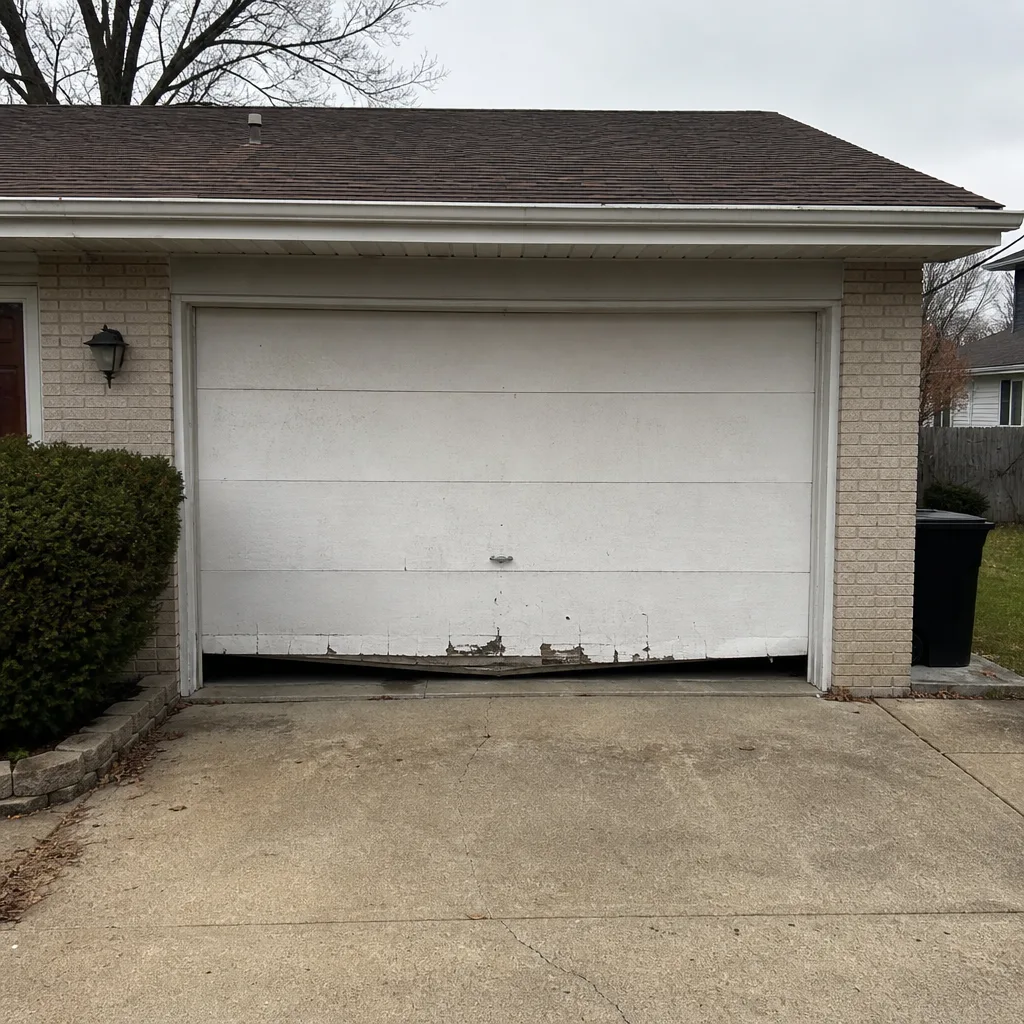 Before
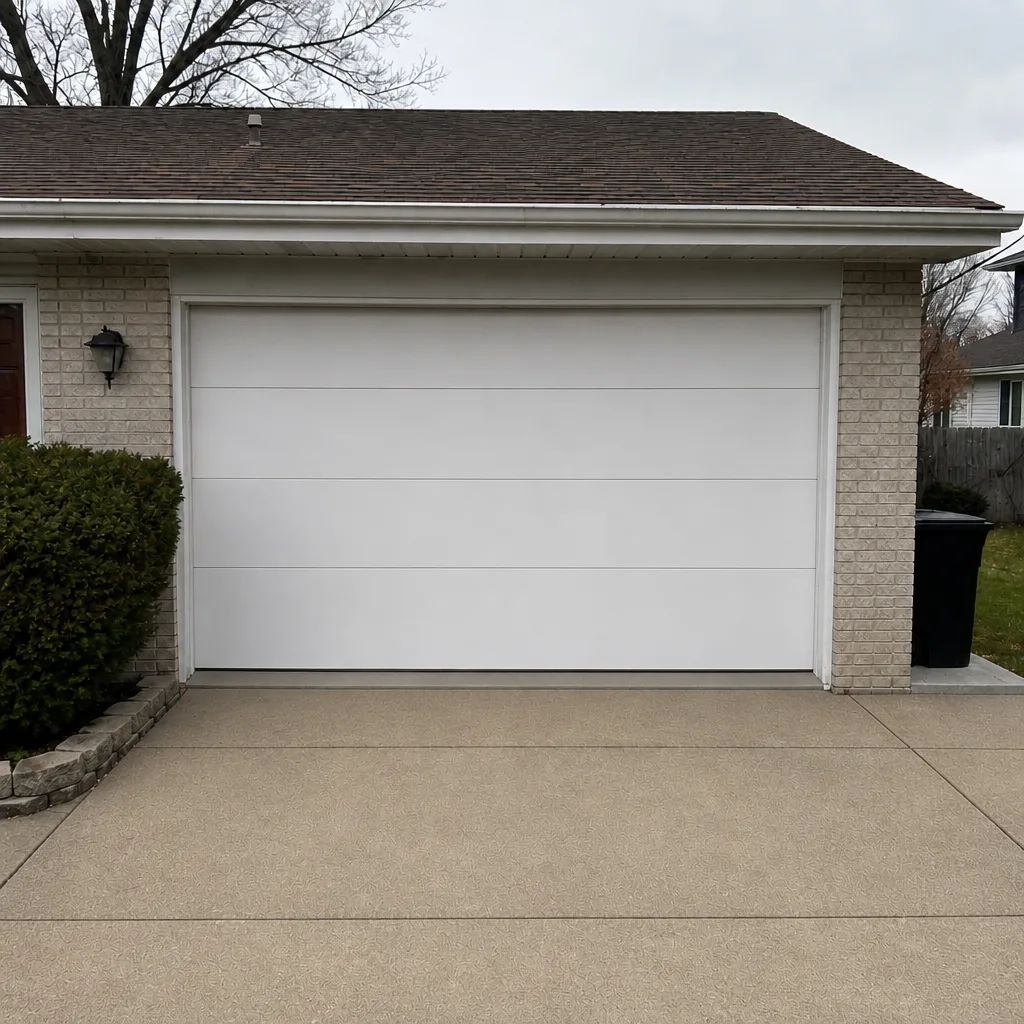 After
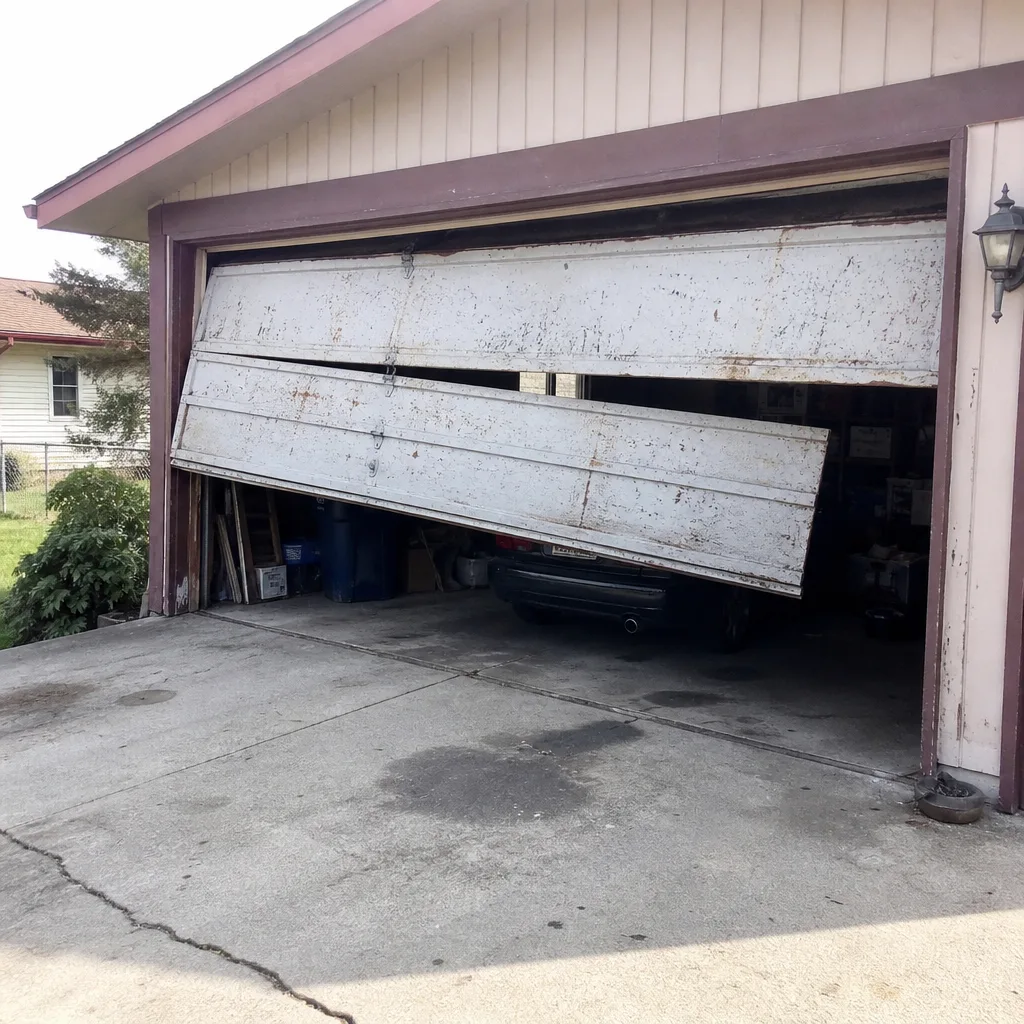 Before
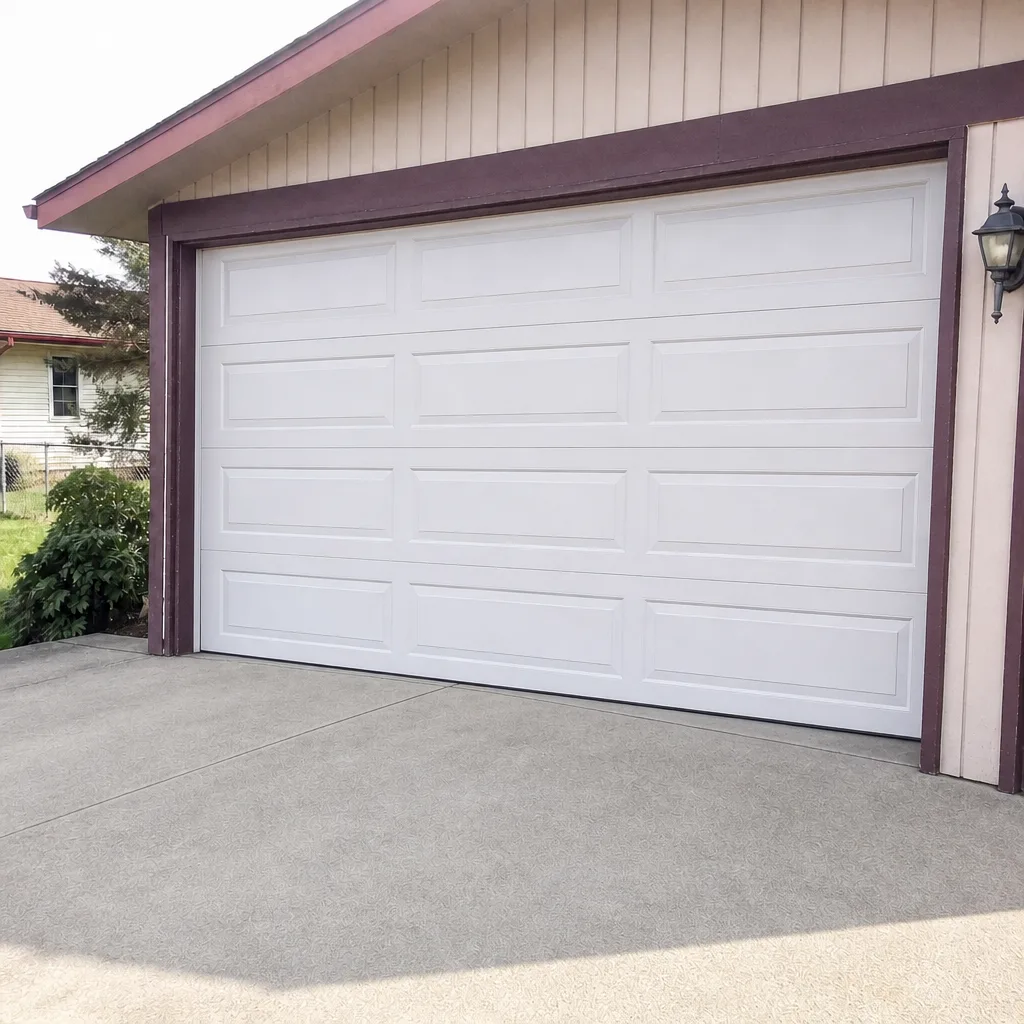 After
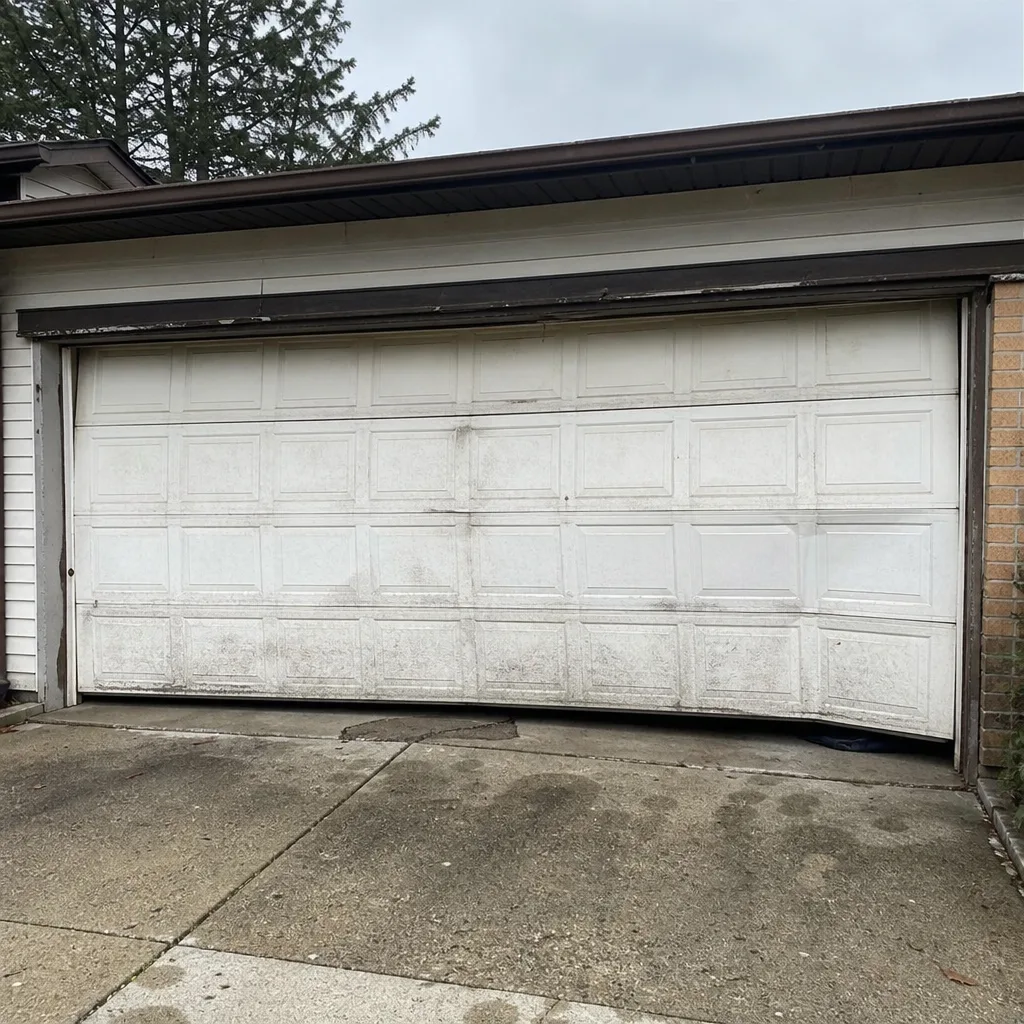 Before
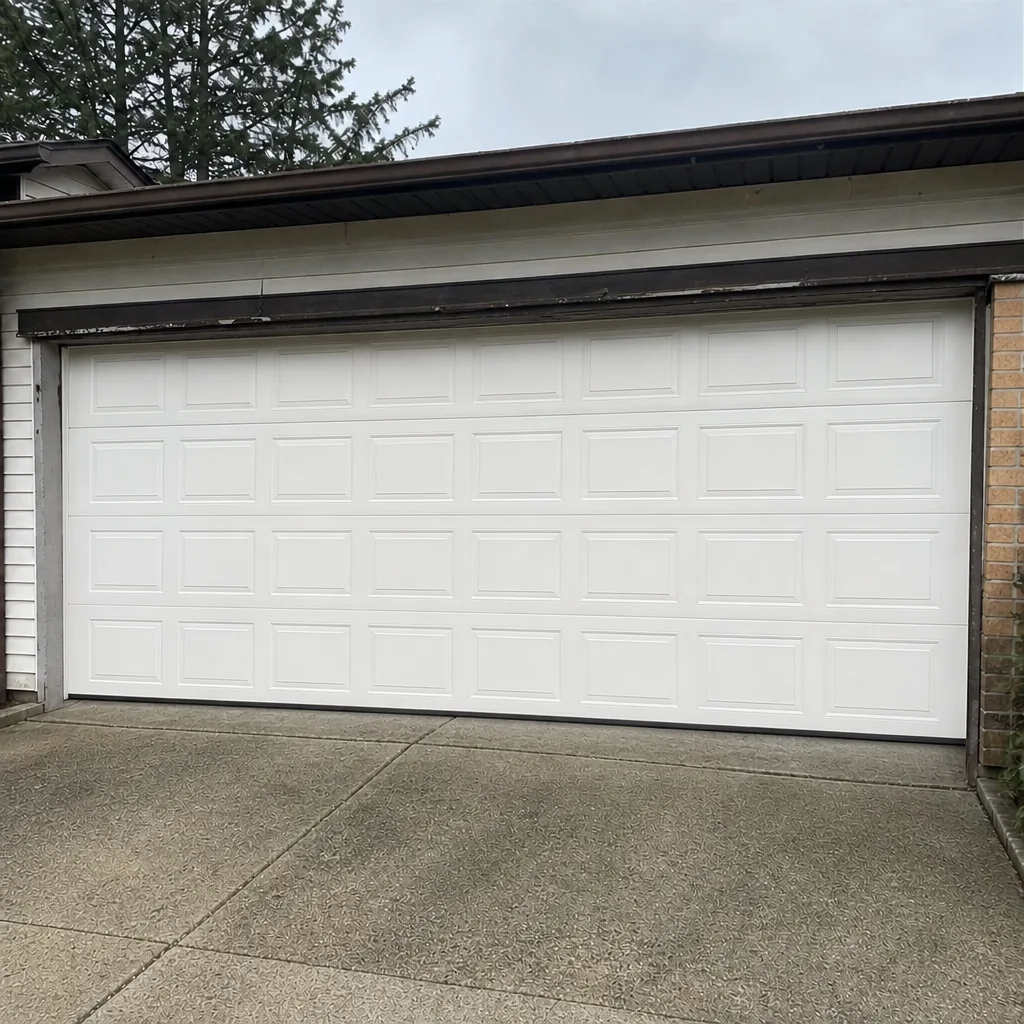 After
When to Call a Professional
Most of the seasonal tasks in this guide are things you can do yourself – lubrication, wiping hardware, running the force test, watching for changes. But some things need a trained technician, and it’s worth knowing exactly where the line is. Call a professional when: the door feels unusually heavy to lift by hand, you see a gap or sag in a spring, a cable looks frayed or loose, the door binds or scrapes on one side, the opener reverses on its own or stops mid-travel, the force test number shifts suddenly, or the bottom seal needs replacing on a door that doesn’t have a simple slip-in channel. Springs, cables, and track adjustments are the mechanical jobs that cause the most injuries when attempted without training. Our technicians have up to 11 years of experience, and we’re familiar with the hardware from eight major manufacturers – LiftMaster, Chamberlain, Genie, Clopay, Amarr, Wayne Dalton, Craftsman, and Raynor – so we show up knowing your system before we touch it. Garage Door Repair Aurora Pros offers free estimates in Aurora – call (855) 337-1088.
Frequently Asked Questions
Once a year for a professional inspection, plus the four seasonal checklists in this guide and a light monthly look. Aurora’s freeze-thaw cycle puts more stress on the door than a milder climate would, so the annual inspection matters more here, especially a spring inspection before the first hard freeze.
The bottom seal and the spring inspection, in that order. The bottom seal is the door’s barrier against cold air and snow, and it’s the cheapest part to replace before winter. The spring is the component most likely to fail under cold stress, and a visual inspection in October catches wear early. If you want the whole checklist done, call (855) 337-1088 – estimates are free.
Because the opener’s force and sensitivity settings were set for one season and the door’s friction changed after winter. Dust, salt residue, and a slightly different track position all change how much force the door needs. A sensitivity reset usually fixes it, but if it persists, the door may have a binding track or a worn component. Call (855) 337-1088 for a diagnostic.
Yes, but differently depending on the door material. Wood-composite doors swell slightly with moisture, steel doors expand and can develop a slight bow, and rubber seals soften. Most of it reverses when the air dries out. Binding on one side or scraping that doesn’t clear up is misalignment, not humidity, and needs a professional look.
Start four to five weeks before the first hard freeze, which historically lands in mid-November. That gives you time to order replacement seals or book a professional service before the cold sets in. If the inspection turns up something like a sagging spring, you want it fixed in October, not in a cold snap.
No. We quote and agree on the price before any work starts, and the written estimate is what sets the final price. If something unexpected turns up mid-job, we stop and re-quote before continuing. Call (855) 337-1088 for a free estimate – the price you approve is the price you pay.
The Bottom Line
Seasonal garage door care in Aurora isn’t one checklist – it’s four, each timed to a different stress period. The October pre-winter work prevents the January failures. The March thaw work clears salt and catches frost-heave misalignment. Summer is about telling moisture swelling from real misalignment. Fall is a week-by-week sequence timed to the mid-November freeze. And all year, the auto-reverse force test is your simplest health reading – a number that stays consistent means the system is fine; a sudden shift means it’s developing something worth a look. Do the simple tasks yourself, call a professional for the mechanical ones, and your door stays reliable as your main entry point. Written by the team at Garage Door Repair Aurora Pros.
garage door opener repair · garage door spring repair · garage door repair · Garage Door Repair Aurora Pros
Have a door or opener that needs a seasonal look before the weather turns? Call Garage Door Repair Aurora Pros at (855) 337-1088 for a free estimate. We answer 24/7, with fast dispatch from 7am to 7pm, Sunday through Friday.